

Many Canadian small businesses are surprised to learn that toner cartridges tested by major American brands often deliver fewer printed pages than expected. For any team managing printing budgets, unplanned toner expenses can quickly add up and disrupt cash flow. Clarifying the facts about toner yield helps owners and office managers compare cartridge types accurately, avoid common pitfalls, and make smarter choices that keep costs low without sacrificing performance.
| Point | Details |
|---|---|
| Understand Toner Yield | Toner yield indicates the number of pages a cartridge can print, which is crucial for managing printing expenses. Actual yields can vary based on coverage and print complexity. |
| Choose the Right Cartridge Type | Evaluating cartridge options, including OEM, remanufactured, and compatible cartridges, can lead to significant cost savings. Compare cost per page, not just initial cartridge price. |
| Monitor Printing Patterns | Track actual print volumes and settings to ascertain genuine toner consumption and optimize budgets. Understanding real-world usage can prevent unexpected costs. |
| Utilize Cost-Per-Page Metrics | Calculate cost-per-page to assess printing expenses effectively, incorporating cartridge costs and print volume for accurate budget forecasting. |
Toner yield represents the total number of pages a printer cartridge can print before requiring replacement, and understanding this concept is critical for Canadian small business owners managing printing expenses. Toner cartridges include complex components like fine powder that are electrostatically charged to form text and images, making their efficiency a key factor in cost management.
Manufacturers typically calculate page yield using a standardized 5% coverage model, which means the cartridge can produce approximately 500 pages if each page contains text or graphics occupying 5% of the page surface. However, this standardized measurement creates significant misconceptions about real-world printing performance. Actual printing scenarios often involve higher coverage percentages, graphics, color documents, and varied printing density, which can dramatically reduce the expected page yield.
Common misconceptions about toner yield include believing that the manufacturer’s stated page count is a guaranteed absolute. In reality, page yield estimates are influenced by testing standards and may not reflect actual usage patterns, leading to potential unexpected printing costs for businesses. Factors like document complexity, print settings, environmental conditions, and specific printer models can cause significant variations in actual toner consumption.
Pro tip: Track your actual print volumes and coverage percentages using printer management software to develop more accurate budgeting for toner replacement costs.
Toner cartridges come in multiple configurations, each with unique characteristics that significantly impact printing efficiency for Canadian small businesses. Cartridge types range from standard to high-yield models, with variations based on toner formulation, size, and printer compatibility, creating a complex landscape of printing options.
The primary types of toner cartridges include original equipment manufacturer (OEM) cartridges, remanufactured cartridges, compatible cartridges, and refilled options. Remanufactured cartridges often deliver yields comparable to OEM products when properly serviced, providing cost-effective alternatives for budget-conscious businesses. OEM cartridges typically offer the most consistent performance, while compatible and refilled options can provide significant cost savings with potentially slightly lower page yields.
Key factors influencing toner cartridge yield include the cartridge design, toner density, printer model compatibility, and intended usage patterns. Some advanced cartridges integrate the toner powder with the imaging drum, creating all-in-one units that can impact overall printing efficiency. Businesses must carefully evaluate their specific printing needs, considering factors like average monthly print volume, document complexity, and print quality requirements when selecting the most appropriate toner cartridge type.
Pro tip: Compare the cost per page across different cartridge types, not just the upfront cartridge price, to determine the most economical printing solution for your business.
Here’s a comparison of common toner cartridge types and their impact on small business printing costs:
| Cartridge Type | Performance Consistency | Average Yield | Cost Savings Potential |
|---|---|---|---|
| OEM | Very reliable | Highest | Low |
| Remanufactured | Variable, often good | Comparable to OEM | Moderate |
| Compatible | Varies by brand | Slightly lower | High |
| Refilled | Unpredictable | Lowest | Highest |
Toner yield measurement follows rigorous international standards designed to provide consistent and comparable information for businesses and consumers. The International Organization for Standardization (ISO) has developed specific protocols that establish a uniform methodology for determining how many pages a printer cartridge can produce under controlled conditions.
The primary standard for measuring toner cartridge yield is ISO/IEC 19752, which specifically addresses monochrome printer cartridges. This standard defines precise testing conditions, including a standardized test page with 5% coverage, consistent environmental parameters, and specific printing patterns. Manufacturers must follow these guidelines to estimate cartridge yields, creating a baseline for comparison that helps consumers make informed purchasing decisions.
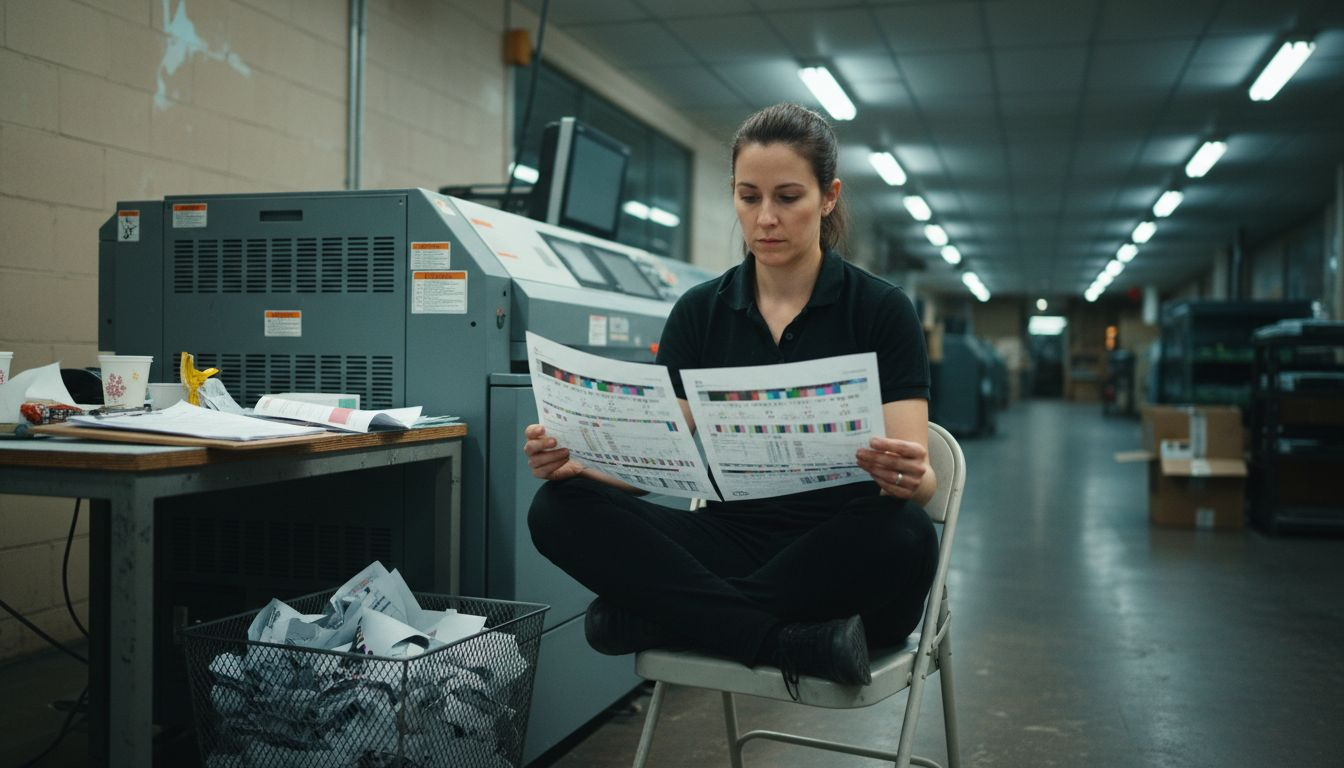
However, it is crucial to understand that ISO standards provide a comparative baseline rather than an exact real-world performance prediction. Actual printing results can vary significantly based on factors like document complexity, print density, environmental conditions, and specific printer models. These variations mean that while ISO standards offer a valuable reference point, individual business printing needs may experience different page yields.
Pro tip: Request sample page yield data from multiple sources and conduct a small-scale test with your specific printing equipment to get the most accurate estimate of actual toner consumption.
Print document complexity significantly influences actual toner consumption patterns), challenging the simplified assumptions of manufacturer-provided page yield estimates. Canadian small businesses must understand that the true toner usage depends on far more than standardized testing conditions.
Key factors affecting real-world toner yield include print coverage density, document type, printer settings, and environmental conditions. Text-heavy documents consume less toner compared to graphics-intensive pages, while high-quality print settings require more toner than draft modes. Printer firmware, cartridge compatibility, and operational behaviors can further impact actual yield performance, creating substantial variations from published page count estimates.
Technical elements like cartridge chip programming, toner formulation, and printer maintenance also play critical roles in determining practical toner consumption. Frequent short print runs, excessive cleaning cycles, and environmental factors such as temperature and humidity can unexpectedly reduce toner efficiency. Businesses should recognize that manufacturer specifications represent ideal conditions, while actual printing environments introduce numerous variables that can dramatically alter expected page yields.
Pro tip: Track your actual print volumes and document types for several months to develop a more accurate understanding of your specific toner consumption patterns.
Review these main factors that can affect actual toner yield for your business:
| Influencing Factor | Description | Business Impact |
|---|---|---|
| Print Coverage Density | Higher coverage uses more toner | Fewer pages per cartridge |
| Document Complexity | Graphics require extra toner | Increases cost per page |
| Printer Settings | High-quality mode uses more toner | Raises toner replacement frequency |
| Environmental Conditions | Heat or humidity affects efficiency | Yield may decrease unexpectedly |
Cost-per-page calculation is an essential financial strategy for Canadian small businesses seeking to manage printing expenses effectively. This precise metric involves dividing the total toner cartridge cost by the number of pages printed, providing a clear view of actual printing expenditures beyond initial hardware investments.
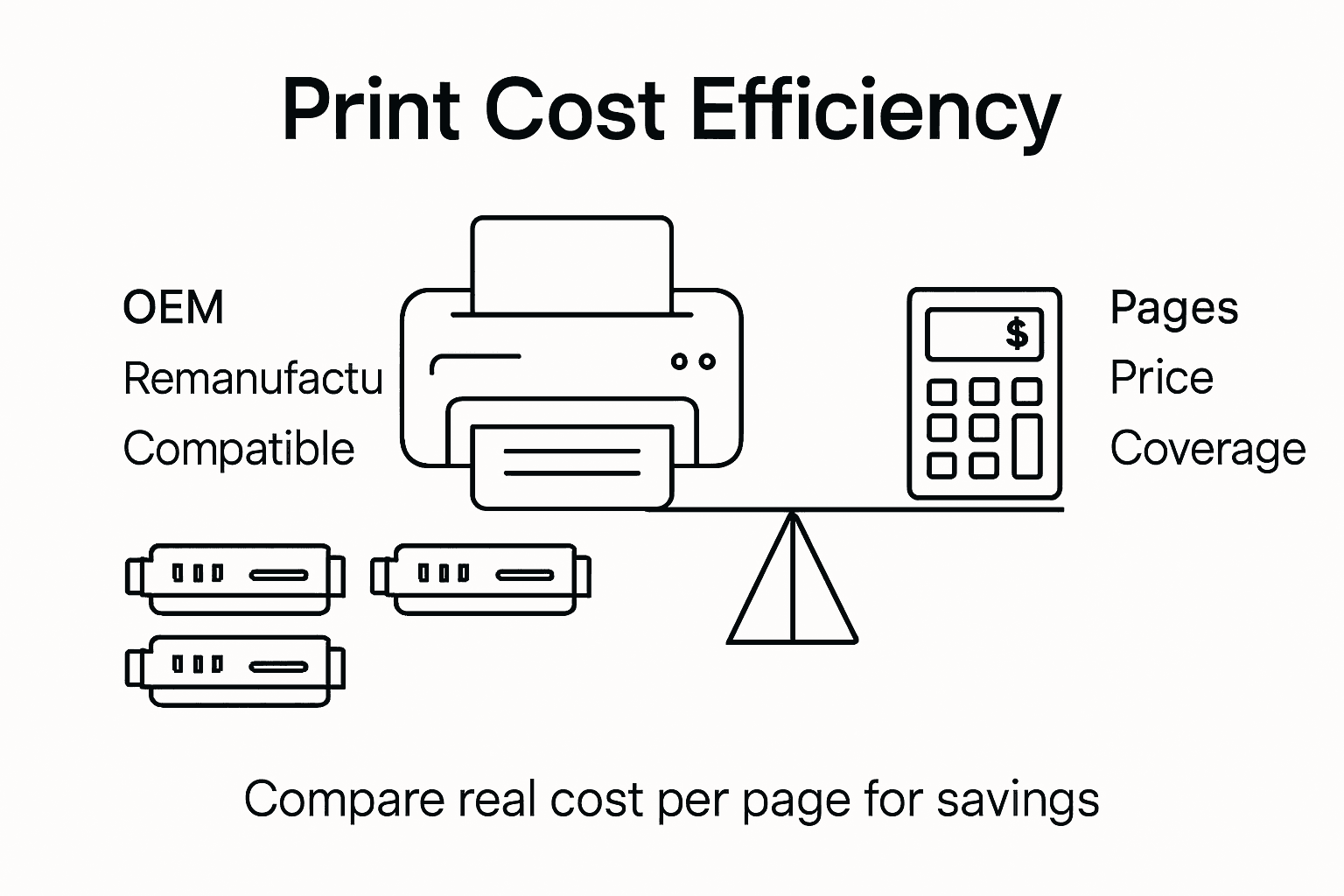
To optimize printing budgets, businesses must conduct comprehensive analysis that goes beyond simple cartridge prices. Key calculation components include toner cartridge cost, page yield, annual print volume, and printer efficiency. Developing an annual budget for printing requires tracking usage patterns, monitoring consumable expenses, and creating flexible financial forecasts that adapt to changing organizational printing needs.
Spreadsheet models can help businesses systematically compare printer and cartridge options by projecting multi-year printing costs. These models incorporate variables like initial printer price, cartridge yield, replacement frequency, and average monthly print volumes. By converting complex printing expenses into straightforward cost-per-page metrics, organizations can make data-driven decisions that balance performance with financial constraints.
Pro tip: Create a detailed spreadsheet tracking your monthly print volumes, cartridge costs, and cost-per-page to develop accurate long-term printing budget projections.
Compatible toner cartridges represent a strategic alternative for Canadian small businesses seeking to optimize printing expenses, offering significant cost savings without necessarily compromising print quality or performance. These third-party manufactured cartridges are specifically designed to work with particular printer models while maintaining competitive page yields.
When evaluating high-yield and compatible options, businesses must conduct thorough assessments that go beyond initial price considerations. Key selection criteria include cartridge compatibility certification, performance consistency, warranty provisions, and alignment with specific organizational printing requirements, ensuring that cost savings do not come at the expense of operational reliability. Remanufactured and compatible cartridges can deliver page yields comparable to original equipment manufacturer (OEM) products when sourced from reputable suppliers.
Quality variations exist among compatible cartridge manufacturers, making due diligence critical. Businesses should request sample testing, review independent performance evaluations, and consider factors like print density, page yield consistency, and potential impacts on printer warranty. The most successful procurement strategies balance cost efficiency with documented performance metrics, allowing organizations to make informed decisions that support both financial and operational objectives.
Pro tip: Request sample compatible cartridges and conduct controlled testing in your specific printer models to verify performance before committing to large-volume purchases.
Managing toner yield is crucial for controlling printing costs and ensuring your business runs smoothly without unexpected expenses. If you want to avoid surprises from real-world toner consumption and make data-driven decisions about cartridge types and cost per page, understanding your options is key. Whether you print high-coverage graphics or mainly text documents, selecting the right cartridges and monitoring your usage can save you time and money.
Discover how affordable and reliable printing supplies can improve your bottom line at GetToner.ca. Explore our wide selection of OEM and compatible toner cartridges, designed to deliver consistent high yields and print quality tailored to your needs. Act now to take advantage of our free shipping on orders over $100 and ongoing promotions for Canadian businesses wanting to optimize their print budgets with trusted products. Start maximizing toner efficiency and reducing costs today by visiting GetToner.ca and experiencing the difference firsthand.
Toner yield refers to the total number of pages a printer cartridge can print before needing replacement. Understanding toner yield is essential for managing printing costs effectively.
Toner yield is typically measured using the ISO/IEC 19752 standard, which defines a 5% coverage test page under controlled conditions. This measurement provides a baseline for comparing cartridge yields.
Actual toner yields can vary due to factors such as print coverage density, document complexity, printer settings, and environmental conditions. These real-world variables often lead to lower yields than the estimates provided by manufacturers.
Toner cartridges come in several types, including OEM, remanufactured, compatible, and refilled options. Each type can significantly affect toner yield, performance, and printing costs, with OEM cartridges generally offering the highest consistency and remanufactured cartridges often being a cost-effective alternative.